Request a quote
We reply by email or WhatsApp.
We only use these details to reply to your inquiry.
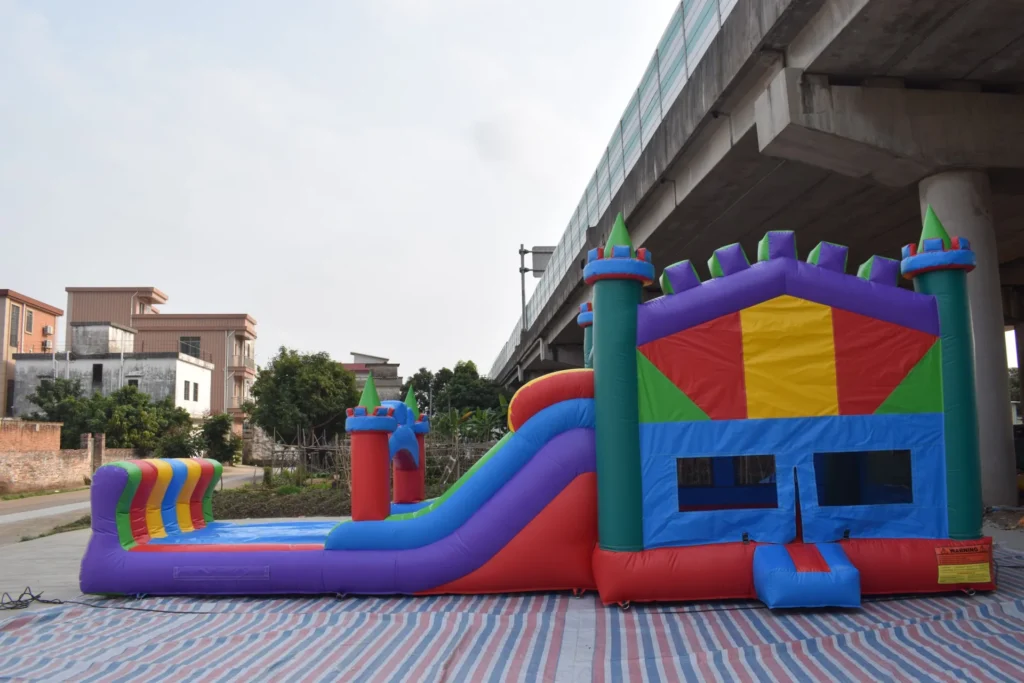
Fast answer: If your fleet books summer parties, a wet/dry combo can be the better first buy: it runs as a water slide in hot weather and as a dry bounce and slide combo the rest of the year, while a water-only slide sits idle in cool months. A dry-only bounce house suits indoor, school and cool-season bookings but is not built to run wet. Going wet adds a hose and faucet, stricter weather rules and full drying before packing.
Wet or dry bounce house quick specs
| Question | Short answer |
|---|---|
| What a wet/dry combo is | A bounce and slide unit that runs with a garden hose or with the water off |
| What a dry-only unit is | A bounce house or dry combo with no water feed, splash pool or wet liner |
| Extra kit for a wet job | Hose, nearby faucet, splash pool where the model has one, ground protection and drying time |
| Rain | Stop play for rain, thunder and strong wind, whichever unit you run |
| Indoors | Dry use only |
| CH Inflatable wet/dry models | CH-IB158 and CH-IB154 |
If most of your bookings are summer parties, make wet/dry combos the core of the fleet and keep dry-only units for indoor, school and cool-season jobs. A wet/dry combo takes water bookings in hot weather and dry bookings the rest of the year, while a water-only slide sits in storage once the weather cools; check that pattern against your own booking records before you commit the fleet to it.
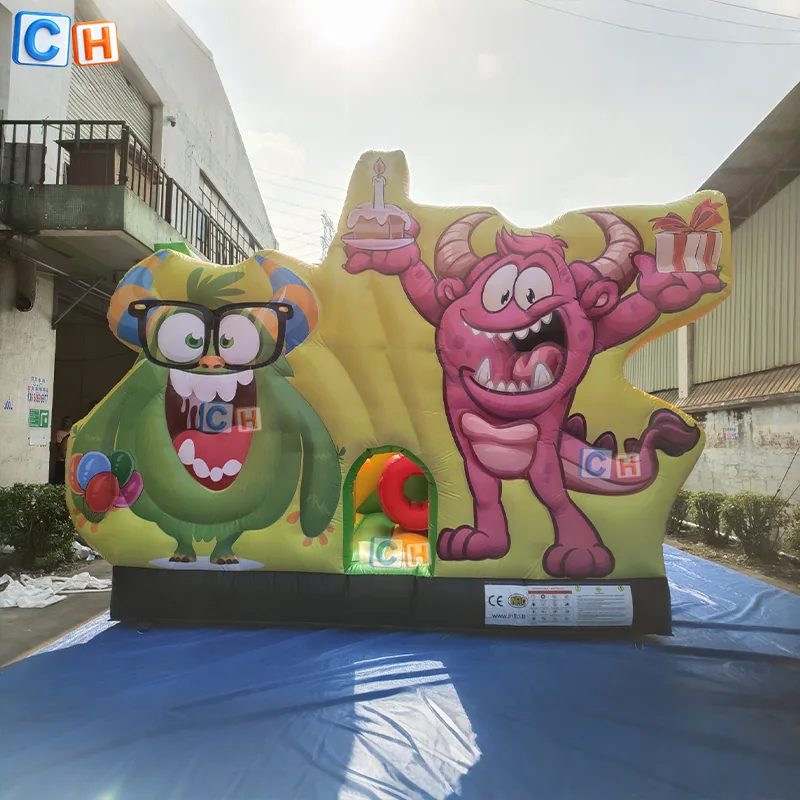
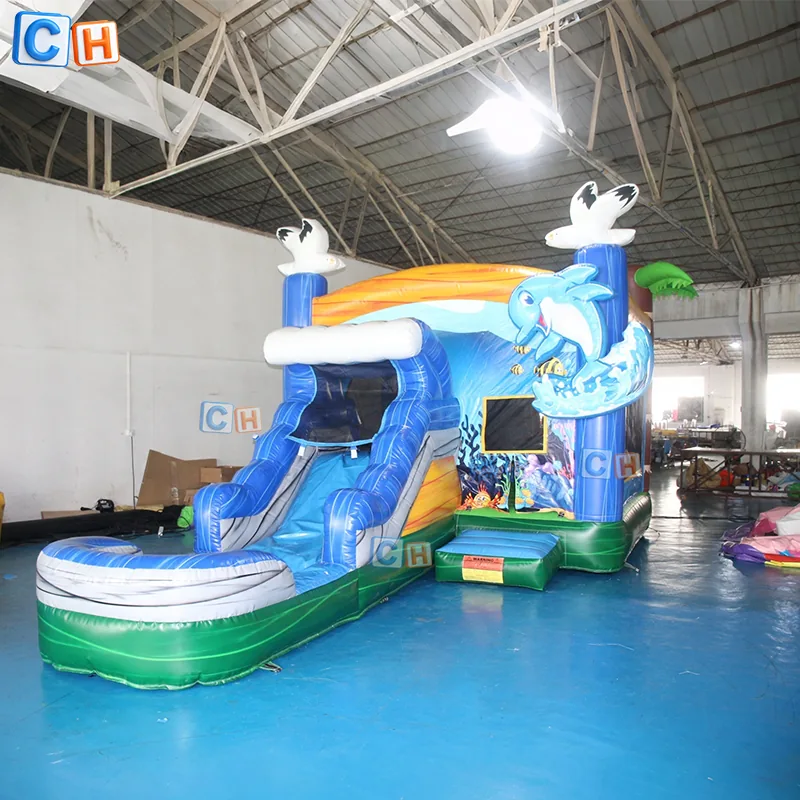
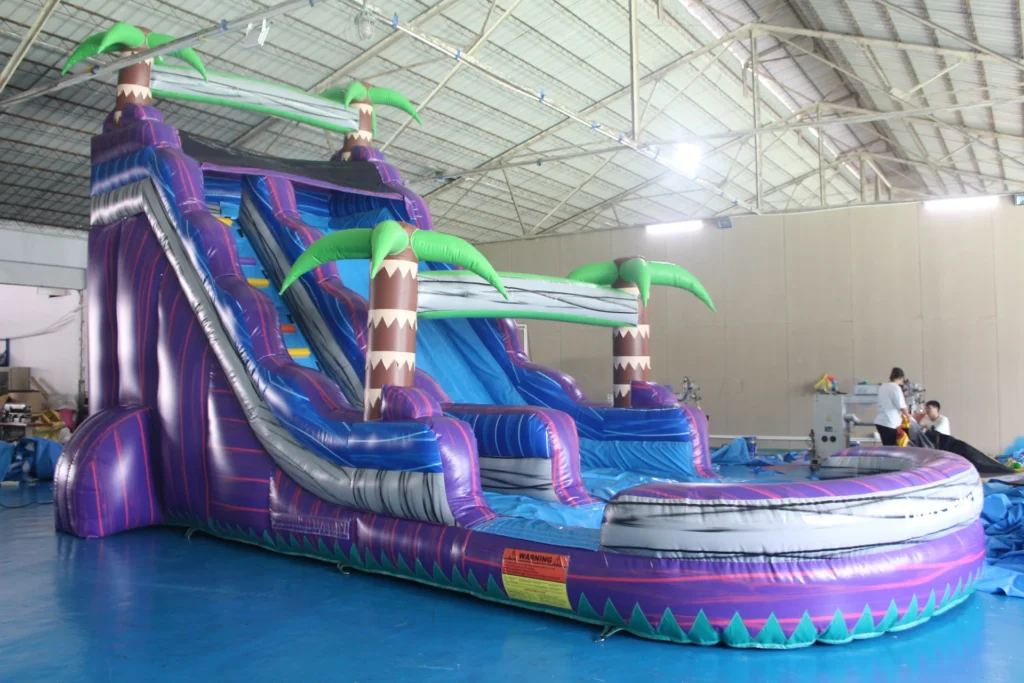
A bounce house combo puts multiple activities in one unit: a jumping area plus extras such as a slide. Wet or dry combos run water down that slide on hot days; for a dry booking the hose stays off and nothing else changes, so the same combo units cover both kinds of booking.
| Point | Dry-only bounce house or jumper | Wet/dry combo | Standalone water slide |
|---|---|---|---|
| Typical bookings | Indoor venues, schools, a church or school carnival, cool-season parties | Backyard birthday parties on hot days, then dry jobs the rest of the year | Summer water activities |
| Bookable season | Any dry booking, indoors or out | Wet jobs in hot weather, dry jobs the rest of the year | Hot-weather jobs only; stored in the cool months |
| Water at the site | None | Hose and faucet when run wet | Hose and faucet every time |
| Wet slide liner and splash pool | No | Wet slide liner; splash pool on some models (confirm per model) | Yes |
| Indoor use | Yes | Dry mode only | No |
| After the job | Wipe and pack | Full drying after a wet run | Full drying every time |
A dry-only unit has no off-season in a hall or a school gym, so it stays in the fleet even when summer bookings lean wet, as do inflatable obstacle courses and plain bouncers. Count last season’s bookings by month and note which ones asked for water; if most summer jobs did, lead with combos, then work out income and payback from your local prices.
For wet/dry use, we build CH-IB158 at 6.5 × 4 m (21 × 13 ft), in castle and rainbow themes, and CH-IB154 at 7.6 × 4 m (25 × 13 ft), in tropical and under-the-sea themes; each runs on one 1,500 W blower. Like our other commercial-grade bounce houses, both use 0.55 mm / 850D Plato PVC for the main body and 0.4 mm for non-load-bearing panels. Our dry combo bounce houses are grouped under bounce houses with slides. The full specs sit on our water slide bounce house page, and standalone units are on the inflatable water slides page.
Running wet adds a garden hose and a faucet within reach, a wet slide liner, a splash pool where the model has one, more ground protection and a drying step at the end of every job; a dry-only unit needs none of these.
| Item | What to plan for a wet run |
|---|---|
| Power (every job, wet or dry) | One 1,500 W blower per unit on CH-IB158 and CH-IB154, with a 110 V/60 Hz or 220–240 V/50 Hz plug to match your country |
| Water feed | A garden hose on the slide lane, from a faucet the hose reaches without crossing the play area or being pulled tight; check the run at the site visit |
| Ground | Grass is best. On concrete, lay protective mats; on sand, clear sharp stones first. Add a groundsheet or mats at the slide exit so the ground there does not turn to mud |
| Space | 6.5 × 4 m (21 × 13 ft) for CH-IB158 or 7.6 × 4 m (25 × 13 ft) for CH-IB154 on level ground, plus the clear space the manual sets on every side and a drained area past the slide exit |
| Anchoring | Ground stakes and guy lines outdoors; ground stakes and sandbags ship with every land unit |
| Slide lane and liner | Water runs down the slide lane on every wet job; check that surface and its seams once the unit is dry, and confirm the liner build of the model when you order |
| Crew | 2 people for setup and teardown of a standard-size bounce and slide combo; larger, heavier models need 3 |
| Drying time | Time at the end of every wet job to dry the unit fully inflated before it is packed |
Give the hose and the cord separate routes across the lawn, keep the blower on dry ground behind the unit, and stake the unit before the water goes on.
Our land inflatables have double-stitched seams as standard, with reinforced stitching on request, and their anchor points are stainless steel D-rings; the staking and ballast steps are in our guide on how to set up a bounce house. For a wet/dry combo, confirm the seam construction of that model when you order.
No. Get riders out when rain, thunder or strong wind arrives. A wet/dry combo is built to take water down its slide, not rain on a dry jumping floor, and storm wind is the bigger risk.
| Rule | When to stop | Where it applies |
|---|---|---|
| City of Hughson inflatable amusement device policy | Stop for winds over 15 mph, rain or thunderstorms; resume only after the weather has been clear for more than 30 minutes | City parks in Hughson, California |
| EN 14960-1:2019 | Maximum outdoor wind speed of 38 km/h (24 mph). Our note, not part of the standard: if the unit’s manual sets a lower limit, follow the manual. | Europe |
| CPSC amusement ride safety bulletin, 2001 | Manufacturers recommend 15–25 mph limits; unload and deflate above 25 mph | United States |
The three come from a city policy, a European standard and a federal safety bulletin, so follow the one that covers your site and the limit in your unit’s manual, whichever is lower. The Hughson policy stops play at 15 mph, the low end of the manufacturer limits in the CPSC bulletin and well under the European ceiling, and it is the only one of the three that sets a restart rule.
Our own rule is not to use our units in high winds or other adverse weather conditions. When a storm cell arrives mid-party, stop using the inflatable at once, get all users off, turn off the blower and then deflate it. Once the weather has cleared and the blower and cords are dry and safe to switch on, inflate the unit again and dry it as set out in the drying steps below before you pack it.
Only a unit built for water should be run wet. A wet/dry combo takes a garden hose on its slide, and the water runs off at the slide exit. A dry-only inflatable bounce house can be wiped down with water, but it should not be used as a water attraction.
| Point | Dry-only bounce house | Wet/dry combo |
|---|---|---|
| Designed to be used | Without water | With water or with the water off |
| Water in | No hose connection | Garden hose on the slide lane |
| Water out | No splash pool; water stays in the folds | Water collects at the slide landing, in a splash pool where the model has one |
| Slide surface | Dry slide vinyl | Wet slide liner |
| After water | Treat as an incident: stop, dry, check | Routine drying after every wet run |
Wet inflatables use water from a garden hose, not from rain. On our wet/dry units, the hose wets the slide lane and the water collects at the slide exit; leave the hose off and the same unit runs dry. In our range, CH-IB158 and CH-IB154 are the wet/dry units; our inflatable bouncers and dry combos are built for dry use. Any unit that has been wet needs the drying routine described below before it goes back in the van.
Age, height and weight rules change once water is running, including how toddlers are split from older riders. The numbers are in our inflatable water slide weight limit guide.
A dry bounce house that gets wet turns slippery, can hold water in its folds and puts the blower and cords close to water, so stop play and keep power away from the water; once the blower and cords are safe to switch on, dry the unit fully inflated before it is packed.
| What happens | What to do |
|---|---|
| The jumping floor and slide get slippery | Stop play and get every rider out |
| The blower, plugs and cords sit near water | Switch off at the outlet and lift plugs off wet ground; if the blower or plugs got wet, have them checked before you switch them on again, including to dry the unit |
| Water collects in folds, seams and stitch lines | Inflate the unit again once the blower is safe to run and wipe the seams; when it is dry, switch off the blower, then open the deflation zippers at the low points |
| Damp vinyl in storage | Do not pack it; dry it inflated first |
For riders, use the same stop, evacuate and switch-off order as in the rain section. Mold comes later, if damp vinyl is folded and stored, and the drying steps below prevent it. While the unit dries, walk every seam and panel; if water has found a split, our bouncy castle repair guide shows how to patch it.
Once the blower and cords are safe to switch on, keep the unit fully inflated with the blower running after the water is off, towel the pools and seams and let the rest air-dry; then switch off the blower, open the deflation zippers and pack the unit only when it is dry inside and out. Vinyl that is folded or stored damp can grow mold, so build drying time into every wet job.
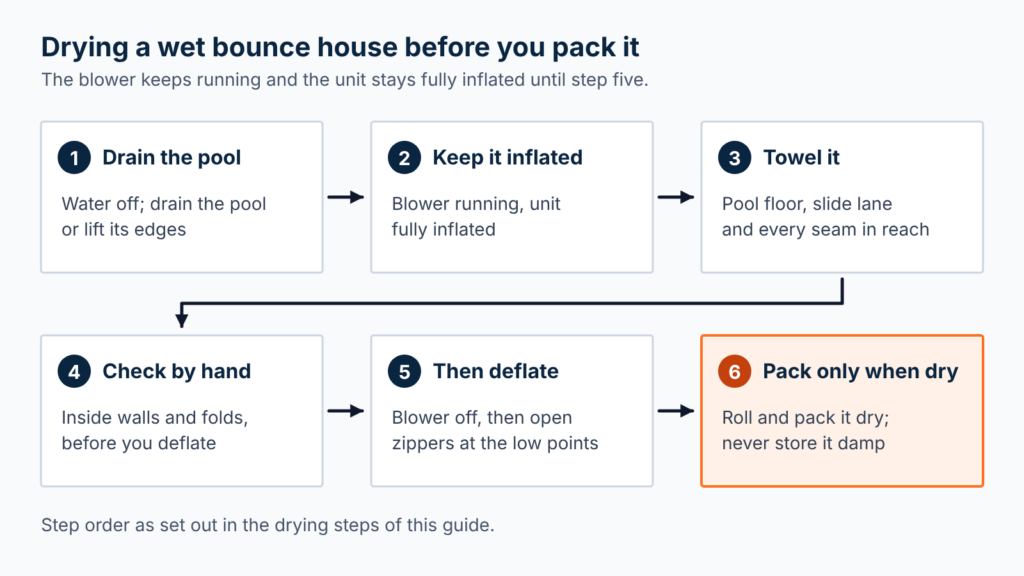
Our care instructions are to wipe the unit with water and a neutral detergent and let it air-dry before storing, keep it away from sharp objects, sand and grit, and never fold or store it damp, because that can lead to mold. The full cleaning routine is in our bounce house cleaning and maintenance guide.
Before buying a water slide combo, check the footprint with its clearance, the overall height, the liner specification, the rider limits on the label and how it converts back to dry use.
| Check | CH-IB158 | CH-IB154 |
|---|---|---|
| Footprint | 6.5 × 4 m (21 × 13 ft) | 7.6 × 4 m (25 × 13 ft) |
| Overall height | 2.5 m (8 ft) | 4.5 m (15 ft) |
| Rated users at once | Up to 8–10 | Up to 6–8 |
| Fabric | 0.55 mm / 850D Plato PVC (main body), 0.4 mm non-load-bearing panels | Same as CH-IB158 |
| Safety net | Encloses the bounce area and lines both sides of the slide, as standard | Same as CH-IB158 |
| Dry use | Runs as a bounce and slide combo with the water off | Same as CH-IB158 |
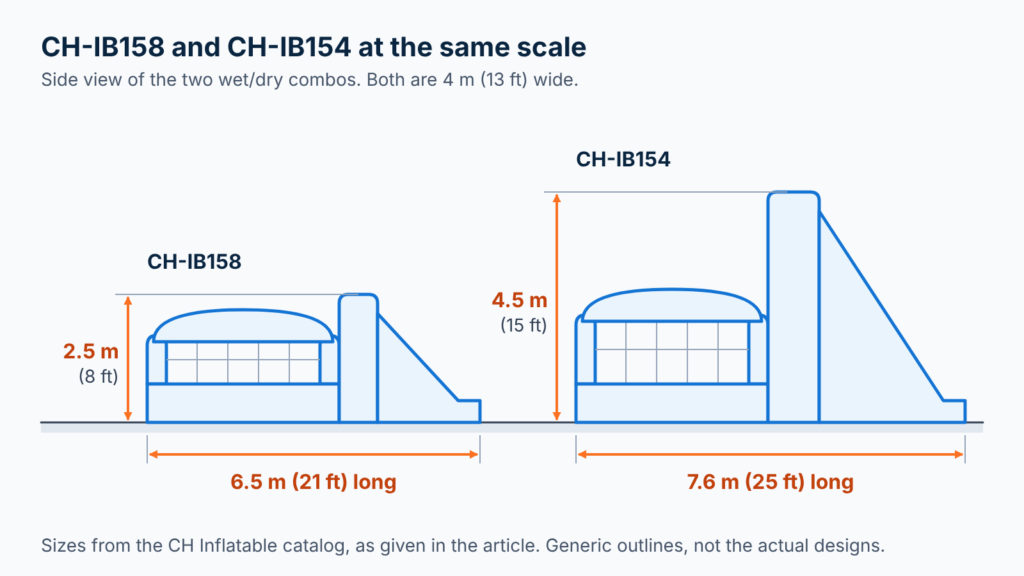
CH-IB154 is the longer and taller of the two but is rated for fewer users at once, so read the rating from each model’s spec sheet, not from its size. Take the rider limits from the label of the exact unit you buy, not from a category average, and have the operator who runs it check the same label; our water slide weight limit guide explains how age and weight limits change on a wet run. Our warranty covers the inflatable for 1 year and the air blower for 6 months. To compare CH-IB158 and CH-IB154 for your fleet, see the drawings on our bounce house water slide page.
Yes, if it is a combo inflatable built for both: leave the hose off and it runs as a bounce and slide combo. A water-only slide is a different product, so check its manual before running it dry.
Once the blower and cords are safe to run, keep the unit inflated, drain the splash pool where the model has one and towel what is left, then switch off the blower and open the deflation zippers at the low points. The drying routine above covers the full sequence.
On concrete or other hard ground, yes: lay protective mats. On sand, clear sharp stones first so they do not tear the fabric. Grass is the best surface; there a groundsheet is optional, but it keeps the base cleaner on wet jobs.
Buy if you will run it often, as a rental business does, and rent if you need one for a few events a year. To check your case, add up what a season of rentals would cost you and compare it with a quote for a commercial unit; CH Inflatable quotes each model per order.
Only in dry mode, and only where the ceiling clears the unit with room to spare. The room checks are in our guide to putting a bounce house indoors.
Tell us your season, your sites and the ages you book for, and we will match inflatable combos or dry units to them and send a layout proposal in 2–5 working days, confirmed per project. Start with the quote and layout request form or browse commercial bounce houses by type.
Figures from the European standard, the city policy and the federal safety bulletin come from the sources listed below. Model sizes, blower, build, warranty, care and handling instructions and quotes come from our own catalog, spec sheets and customer FAQ. Where no standard or regulator gives a figure, as with water flow and hose length, the guide gives operating advice without numbers, and the manual for your model comes first.
About CH Inflatable: CH Inflatable (Guangzhou CH Inflatables Co., Ltd.) is a commercial inflatable manufacturer in Guangzhou, China, founded in 2009, with a 4,000 m² factory and 50 staff. Its land units hold an EN 14960 certificate.

CH Inflatable is the brand of Guangzhou CH Inflatables Co., Ltd., a commercial inflatable manufacturer founded in 2009 in Nansha District, Guangzhou.


